Letter O 3D Papercraft for Kids – COLOR: A Practical Guide
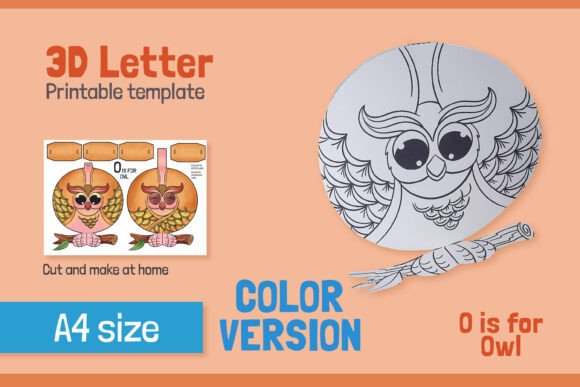
Educational tools that blend creativity with cognitive development are increasingly valued in both home and classroom settings. The Letter O 3D Papercraft for Kids – COLOR represents a specific niche within this category, offering a hands-on approach to literacy and fine motor skill acquisition. This resource is not merely a coloring page but a structured activity designed to transform a flat sheet of paper into a three-dimensional object representing the letter "O" for Owl. Understanding the mechanics, benefits, and limitations of such a tool helps parents and educators determine if it aligns with their instructional goals.
Understanding the Product Structure
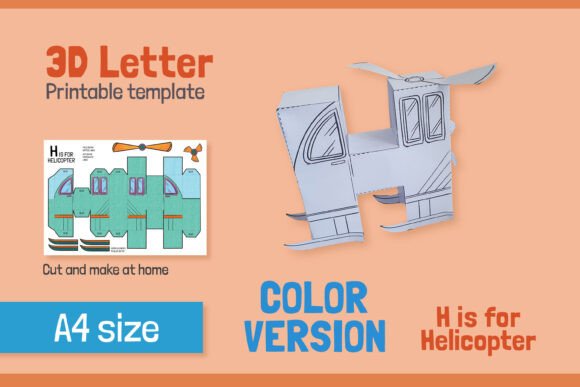
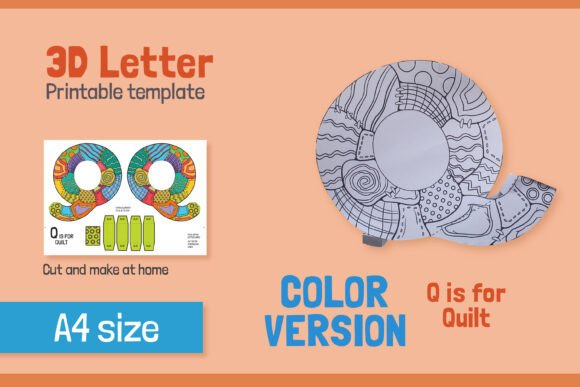
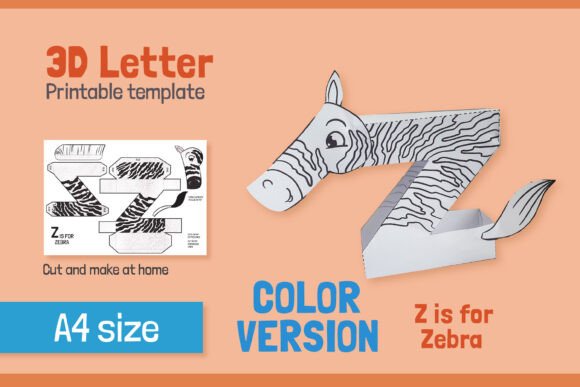
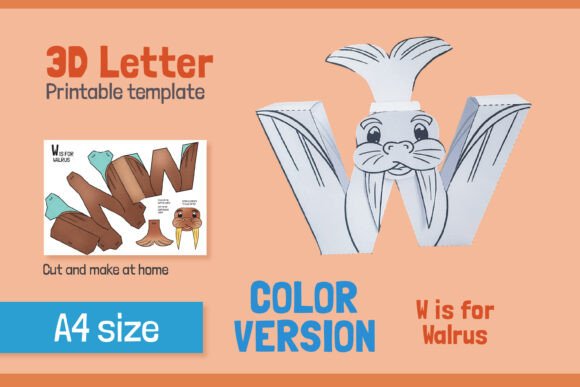
At its core, this papercraft is a digital download intended for physical assembly. It typically includes high-resolution files, such as a 300 dpi JPEG and a PDF, ensuring that the printed output remains crisp and clear. The design features pre-drawn lines for cutting and folding, along with vibrant colors that reduce the need for additional art supplies, although children may still choose to add personal touches. A critical component of modern papercraft kits is the inclusion of instructional support; in this case, the PDF contains a link to a video tutorial. This multimedia approach addresses the common frustration of interpreting static diagrams, making the assembly process more accessible for younger users or those new to paper engineering.
The subject matter, an owl associated with the letter "O," serves a dual purpose. It reinforces phonetic recognition by linking the visual shape of the letter to a familiar animal, while the 3D construction requires spatial reasoning to visualize how two-dimensional shapes form a three-dimensional structure. This integration of literacy and geometry is a key selling point for educational buyers.
Educational Benefits and Skill Development
One of the primary reasons educators and parents seek out resources like the Letter O 3D Papercraft for Kids – COLOR is the development of fine motor skills. The actions required—cutting along precise lines, folding along creases, and applying glue to specific tabs—demand hand-eye coordination and dexterity. For young children, these repetitive motions strengthen the small muscles in the hands and fingers, which are essential for writing and other daily tasks.
Beyond motor skills, the activity fosters spatial awareness. Children must understand orientation and depth to successfully assemble the model. They learn that a flat pattern can become a volumetric object, a concept that lays the groundwork for later studies in mathematics and engineering. Furthermore, the step-by-step nature of the project encourages patience and following instructions. In a classroom setting, this can be used to teach sequential thinking and attention to detail.
The color version of the papercraft also offers aesthetic advantages. Since the design is pre-colored, the final result is visually striking immediately upon completion. This can provide a sense of accomplishment for children who may feel frustrated by the time commitment required for full coloring projects. However, it does not eliminate creativity entirely; children can still modify colors or add backgrounds, allowing for personalized expression within a structured framework.
Practical Considerations and Tradeoffs
While the benefits are clear, there are practical considerations to evaluate before purchasing or downloading this type of resource. First, the requirement for printing means that access to a reliable printer and quality paper is necessary. Standard copy paper may be too flimsy for a sturdy 3D model, so cardstock is often recommended. This adds a minor material cost and logistical step that digital-only activities do not require.
Second, the assembly process requires supervision, particularly for younger children. Scissors and glue are involved, and precision is key to a successful outcome. If a child cuts incorrectly or folds in the wrong direction, the structural integrity of the "O" may be compromised. Therefore, this activity is best suited for guided learning sessions rather than independent play for very young learners. The presence of the video tutorial mitigates this issue somewhat, but adult facilitation remains valuable.
Another tradeoff is the time investment. Unlike a simple worksheet that can be completed in minutes, a 3D papercraft requires sustained focus. For some educational contexts, this depth is desirable. For others, where quick reinforcement of a concept is needed, it may be too time-consuming. Educators must balance the depth of engagement against the available class time.
Ideal Use Cases
The Letter O 3D Papercraft for Kids – COLOR is a strong fit for several specific scenarios. It works well as a centerpiece for a thematic unit on letters or animals. For example, during a week focused on the letter "O," teachers can use the owl craft as a culminating activity that synthesizes learning about the letter’s shape, sound, and associated vocabulary. It also serves as an excellent decorative element for classrooms or homes, providing a tangible display of student work that is more engaging than flat drawings.
For homeschooling parents, this resource offers a structured yet flexible activity that can be integrated into a broader curriculum. It combines art, language arts, and basic geometry in a single lesson plan. Additionally, it is suitable for rainy-day activities or quiet time at home, providing a screen-free alternative that keeps children engaged in productive manual tasks.
When to Consider Alternatives
Despite its advantages, this papercraft may not be the best choice for every situation. If the goal is rapid assessment of letter recognition, a simple matching game or worksheet is more efficient. Similarly, for children with significant motor skill challenges, the precision required for cutting and folding might lead to frustration rather than enjoyment. In such cases, pre-cut templates or simpler collage activities might be more appropriate accommodations.
Furthermore, if budget constraints are tight and printing resources are limited, digital interactive apps or reusable magnetic letters might offer better long-term value. These alternatives do not consume paper or ink and can be used repeatedly without degradation. However, they lack the tactile satisfaction and physical permanence of a completed papercraft model.
Making the Decision
Choosing the Letter O 3D Papercraft for Kids – COLOR depends on your specific educational objectives and resources. If you value hands-on learning, have access to printing facilities, and are willing to invest time in guided assembly, this tool offers substantial developmental benefits. It transforms abstract concepts into concrete objects, making learning memorable and enjoyable. However, if you need quick, low-prep activities or have limited access to crafting supplies, alternative methods may serve your needs better.
Ultimately, this papercraft is a specialized tool designed to enhance fine motor skills and spatial reasoning through the lens of literacy. By understanding its requirements and potential outcomes, you can decide whether it fits into your teaching strategy or home learning environment. The combination of visual appeal, educational value, and structured guidance makes it a noteworthy option for those seeking to bring learning to life through creative construction.