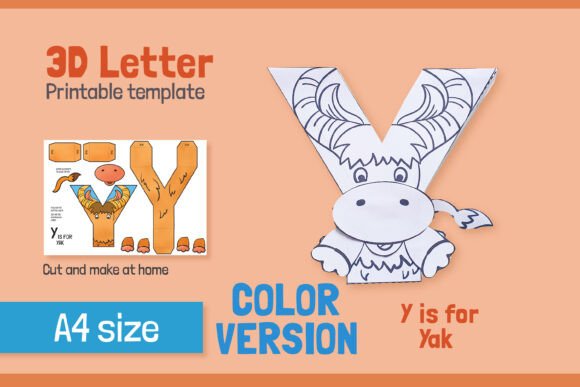
Letter Y 3D Papercraft for Kids – COLOR: Transforming Alphabet Learning Through Tactile Design
In an era where digital screens dominate early childhood experiences, there is a growing and necessary counter-movement toward tangible, hands-on learning. Educators, parents, and creative professionals are increasingly recognizing that physical interaction with educational materials fosters deeper cognitive connections than passive consumption alone. The Letter Y 3D Papercraft for Kids – COLOR represents more than just a simple craft activity; it is a strategic tool for developing fine motor skills, spatial awareness, and letter recognition through active engagement. By bringing the abstract concept of the alphabet into the three-dimensional world, this resource bridges the gap between playful creativity and structured learning.
The Resurgence of Tactile Learning in a Digital Age
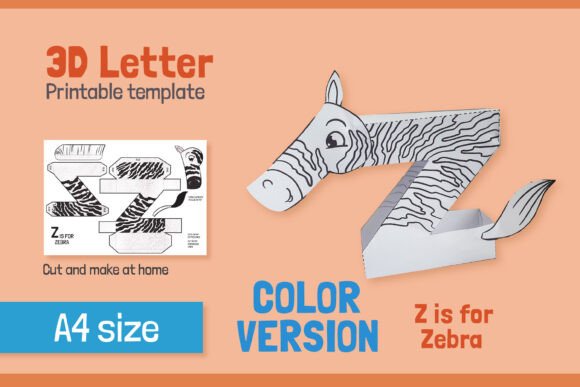
Modern workflows in education and child development are shifting. While technology offers undeniable benefits, there is a marked return to "slow learning" practices that emphasize patience, precision, and physical manipulation. This trend is not merely nostalgic; it is rooted in developmental psychology. When children engage with materials like the Letter Y for YAK papercraft, they are not just coloring a page. They are executing a complex sequence of actions: cutting along precise lines, folding at specific angles, and adhering surfaces together. These actions require hand-eye coordination and dexterity that typing on a tablet simply cannot replicate.
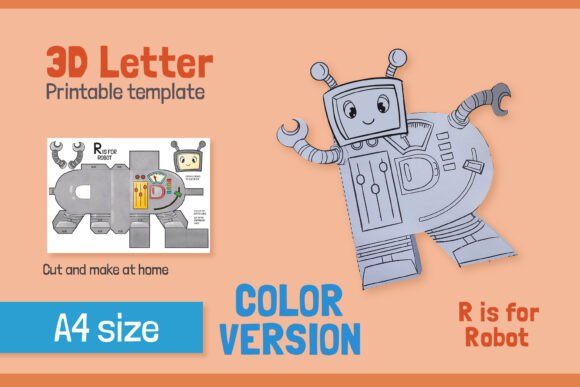
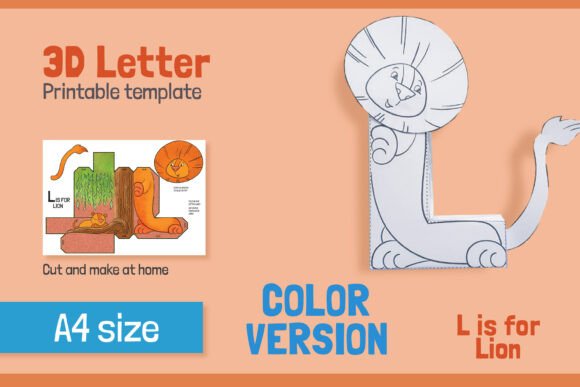
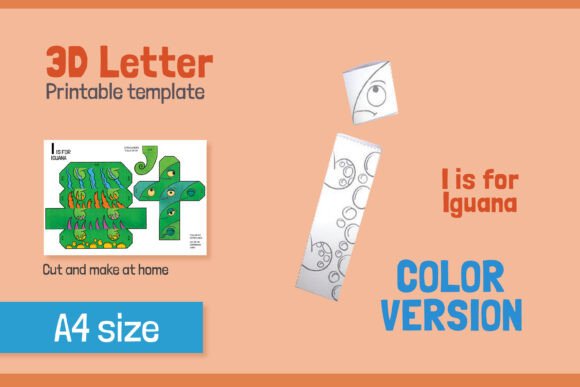
For professionals in early childhood education, this shift means re-evaluating the tools used in classrooms. The demand for resources that are both visually stimulating and mechanically engaging has risen. The Letter Y 3D Papercraft for Kids – COLOR meets this need by offering a high-resolution, print-ready solution that transforms a flat A4 sheet into a standing object. This transformation captivates young learners, turning the mundane task of learning letters into an architectural challenge suitable for small hands.
Designing for Engagement: Why the Color Version Matters
Visual appeal plays a critical role in maintaining a child’s attention span. The color version of this papercraft is designed with vibrant hues that immediately draw the eye, making the learning process inviting rather than intimidating. Unlike black-and-white templates that require extensive coloring before assembly can begin, the pre-colored design allows children to focus on the construction aspect immediately. This reduces friction in the learning process and provides instant gratification, which is essential for maintaining motivation in younger demographics.
The specific choice of the Yak for the letter Y is also significant. It introduces children to less common vocabulary in a memorable way, expanding their linguistic horizon beyond typical examples like "yellow" or "yo-yo." This approach aligns with modern pedagogical strategies that encourage diverse vocabulary acquisition early on. The 300 dpi JPEG format ensures that when printed, the colors remain sharp and the lines distinct, preventing frustration during the cutting phase. Clarity in design is paramount for independent work, allowing children to feel a sense of ownership over their creation.
Building Essential Skills Through Structured Play
The practical implications of using 3D papercraft extend far beyond the final product. The process itself is a rigorous exercise in executive function. Children must plan their cuts, manage their materials, and follow a sequential order to achieve the desired result. This mirrors the problem-solving skills required in later academic and professional settings. Here is how the Letter Y 3D Papercraft for Kids – COLOR specifically contributes to developmental milestones:
- Fine Motor Development: Cutting out intricate shapes strengthens the small muscles in the hands and fingers, which is crucial for handwriting readiness.
- Spatial Awareness: Understanding how a 2D net folds into a 3D object helps children visualize geometric relationships and depth.
- Patience and Focus: The assembly process requires sustained attention, helping to build the stamina needed for longer learning tasks.
- Following Instructions: Utilizing the provided PDF and video link teaches children how to interpret multi-modal instructions, a key skill in today’s information-rich environment.
For entrepreneurs and creators in the educational space, understanding these benefits is vital. Products that offer clear developmental value are more likely to be adopted by schools and recommended by therapists. The inclusion of a video tutorial link within the PDF file is a thoughtful addition that supports diverse learning styles. Visual learners can watch the assembly, while kinesthetic learners can follow along with their hands, ensuring that the barrier to entry is low for both children and the adults guiding them.
Integrating Papercraft into Modern Educational Workflows
Integrating tools like the Letter Y for YAK craft into daily routines does not require a complete overhaul of existing curricula. Instead, it serves as a versatile supplement that can be adapted to various contexts. For homeschooling parents, it offers a structured yet flexible activity that fits into broader literacy units. For classroom teachers, it provides a quiet, focused activity that can be used for center time or as a reward for completed work. The portability of the digital file means that resources can be accessed instantly, printed on demand, and reused across different groups of students.
Moreover, the aesthetic quality of the finished product makes it suitable for display. Decorating the classroom with student-made 3D letters creates an immersive literacy environment. It signals to children that their work is valued and visible, fostering a sense of pride and accomplishment. This environmental cue reinforces learning even after the craft session has ended, as students interact with the displayed letters daily.
Practical Recommendations for Best Results
To maximize the educational and creative potential of the Letter Y 3D Papercraft for Kids – COLOR, consider the following best practices:
- Use Quality Paper: Print the 300 dpi JPEG on cardstock rather than standard printer paper. The added weight provides structural integrity, making the 3D shape more durable and easier to handle.
- Prepare the Workspace: Ensure children have access to safety scissors, glue sticks, and a clean, flat surface. Organization reduces distractions and helps maintain focus on the task.
- Watch the Tutorial Together: Before starting, review the linked video as a group. This sets expectations and clarifies any potentially confusing steps, reducing frustration during assembly.
- Encourage Creativity: While the template is pre-colored, allow children to add their own details or backgrounds. This personalization enhances emotional connection to the project.
These steps ensure that the activity remains enjoyable and educational, rather than becoming a source of stress. The goal is to facilitate a positive association with learning and creation.
The Broader Impact on Creative Practices
For hobbyists and DIY enthusiasts, this type of papercraft represents a gateway into more complex paper engineering. It demonstrates how simple materials can be transformed into sophisticated structures through careful design. This insight is valuable for anyone interested in design thinking or prototyping. The principles used in creating the Letter Y for YAK—precision, planning, and execution—are foundational to many creative and technical fields.
Furthermore, the availability of such high-quality digital resources democratizes access to creative education. Parents and educators no longer need to be expert designers to provide engaging, professional-grade learning materials. They can leverage the expertise of creators who have already solved the structural challenges, allowing them to focus on facilitation and interaction with the children.
In conclusion, the Letter Y 3D Papercraft for Kids – COLOR is a testament to the enduring power of hands-on learning. It combines aesthetic appeal with educational rigor, offering a meaningful alternative to screen-based activities. By integrating such tools into our teaching and parenting practices, we support the holistic development of children, nurturing not only their literacy but also their creativity, patience, and problem-solving abilities. As we continue to navigate the complexities of modern education, resources that bridge the digital and physical worlds will remain indispensable.