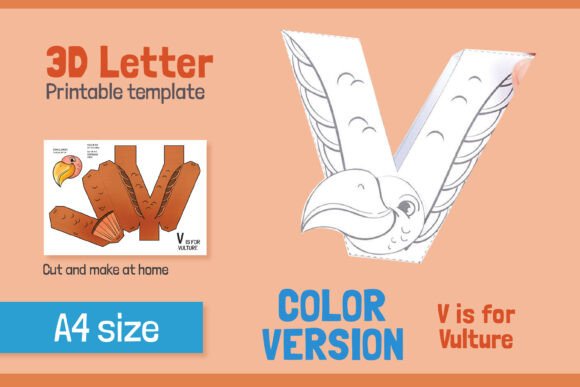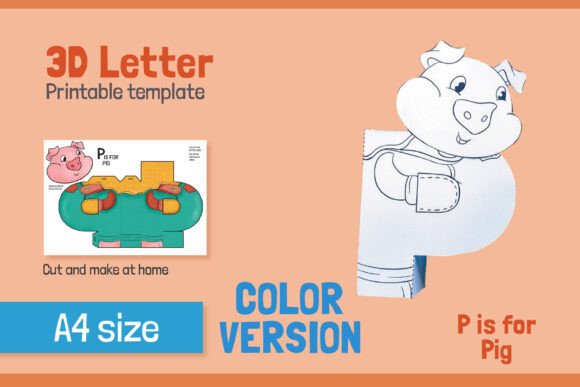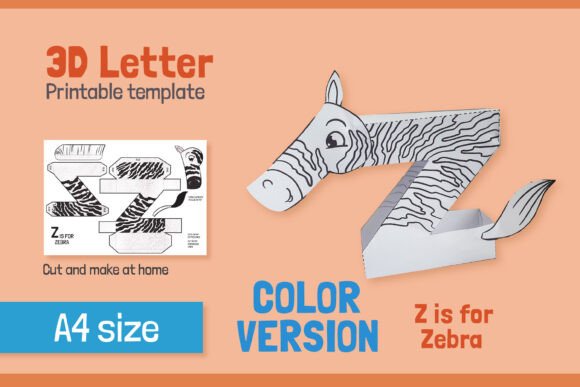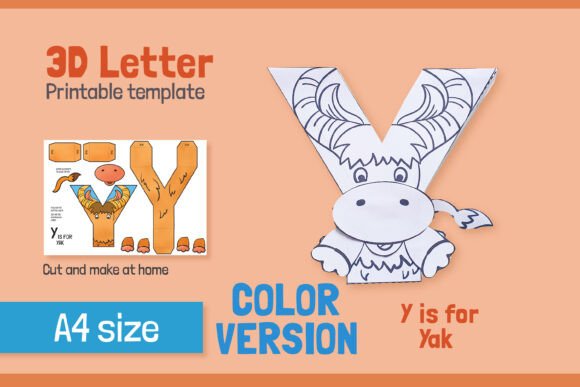
Bringing the Alphabet to Life: The Educational Power of 3D Papercraft Letter K for Koala
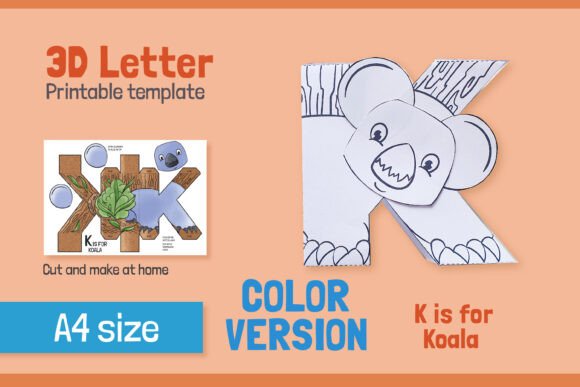
In an era dominated by digital screens and virtual interactions, the tactile experience of creating something with one’s own hands remains a cornerstone of early childhood development. Among the myriad of educational tools available to parents and educators, 3D papercraft stands out as a uniquely effective medium for blending creativity with cognitive growth. Specifically, the Letter K 3D Papercraft for Kids – COLOR Version offers more than just a fun afternoon activity; it serves as a comprehensive learning module that brings the alphabet to life through the charming figure of a koala.
This article explores the significance of hands-on crafting in education, details the specific benefits of the Letter K Koala model, and provides guidance on how to maximize the learning potential of this vibrant resource. Whether you are a classroom teacher looking to decorate your learning space or a parent seeking meaningful screen-free activities, understanding the mechanics and benefits of 3D paper modeling can transform how you approach early literacy and motor skill development.
The Intersection of Craft and Cognition
At first glance, cutting and folding paper may seem like simple play. However, from an educational psychology perspective, these actions are complex neurological exercises. When a child engages with a 3D alphabet papercraft, they are not merely assembling a toy; they are engaging in a multi-sensory learning process. This process reinforces the connection between abstract symbols (the letter K) and concrete objects (the koala), a critical step in literacy acquisition.
Modern education emphasizes STEAM (Science, Technology, Engineering, Arts, and Mathematics) principles. Papercraft sits comfortably at this intersection. It requires engineering thinking to understand how a 2D sheet transforms into a 3D object, artistic expression through coloring and assembly, and mathematical spatial awareness to align tabs and folds correctly. By introducing children to these concepts through a familiar and friendly character like a koala, we lower the barrier to entry for complex spatial reasoning tasks.
Why the "Color Version" Matters
The specific inclusion of a COLOR version in this papercraft set is a deliberate pedagogical choice. While pre-colored models are convenient, the act of coloring engages different neural pathways. It allows for personalization, giving the child ownership over their creation. When a child colors the koala before assembly, they are practicing fine motor control within bounded lines, enhancing hand-eye coordination. Furthermore, the vibrant results serve as a powerful visual reward, encouraging completion of the task and boosting self-esteem.
Breaking Down the Letter K Koala Project
The Letter K for Koala model is designed with precision to ensure success for young crafters. Understanding the components of the kit helps in preparing for a smooth crafting session. The package typically includes high-resolution files that ensure crisp lines and clear instructions, which are vital for maintaining the structural integrity of the final 3D model.
- High-Resolution A4 Page: The primary component is an A4 page printed at 300 dpi. This high resolution ensures that when cut, the edges are clean, and the text or design elements remain sharp. This quality is essential for professional-looking results that children can be proud of.
- Format Flexibility: Available in JPEG format for easy viewing and printing, as well as a PDF file for consistent layout preservation across different devices.
- Video Assembly Guide: Perhaps the most valuable feature for beginners is the inclusion of a link to a video tutorial. This multimodal instruction method supports visual learners who may struggle with static diagrams, ensuring that no child feels left behind due to confusing instructions.
The design focuses on the letter K, transforming it into a recognizable koala shape. This dual representation reinforces phonemic awareness. As the child builds the letter, they simultaneously reinforce the sound /k/ and associate it with the word "Koala." This contextual learning is far more effective than rote memorization of flashcards.
Developing Essential Skills Through Play
The practical relevance of this activity extends beyond the immediate joy of creation. Here is how the Letter K Koala papercraft contributes to holistic child development:
- Fine Motor Skill Enhancement: The precise movements required to cut along curved lines, fold along creases, and apply glue to small tabs strengthen the small muscles in the hands and fingers. These muscles are the same ones used for writing, typing, and buttoning clothes.
- Spatial Awareness and Geometry: Transforming a flat 2D net into a 3D object requires the child to visualize depth and volume. They learn about faces, edges, and vertices in a tangible way, laying the groundwork for future geometry lessons.
- Patience and Focus: Completing a papercraft model requires sustained attention. In a world of instant gratification, this activity teaches the value of patience and the satisfaction of working through a multi-step process to achieve a final goal.
- Following Instructions: The ability to read and follow sequential steps is a critical life skill. The video guide and printed templates teach children how to process information in order, a skill that translates directly to academic subjects like math and science.
Practical Applications in Home and Classroom
Integrating the Letter K 3D Papercraft into daily routines or lesson plans is straightforward. For homeschooling parents, it can serve as the centerpiece of a "K" week, accompanied by reading books about koalas, discussing habitats, and exploring other words that start with K. The finished models can be displayed to create a vibrant, student-made alphabet wall, fostering a sense of community and achievement.
In traditional classroom settings, this activity is ideal for station rotation. While one group works on literacy exercises, another can engage in the papercraft station. The collaborative nature of the activity also encourages peer-to-peer learning, where children help each other with tricky folds or share coloring ideas. Moreover, the decorative potential of these models cannot be overstated. A classroom adorned with 3D letters created by the students themselves becomes a more inviting and personalized learning environment.
Common Misconceptions About Papercraft
Many adults hesitate to introduce papercraft to young children, assuming it is too difficult or messy. However, modern designs like the Letter K Koala are engineered specifically for younger hands. The tabs are larger, the folds are clearly marked, and the complexity is scaled appropriately. Another misconception is that it is purely an art activity. As discussed, its value lies heavily in cognitive and motor skill development, making it a robust educational tool rather than just a pastime.
Tips for a Successful Crafting Experience
To ensure the best experience with your 3D Alphabet Papercraft, consider the following tips:
- Prepare the Workspace: Ensure you have sharp scissors, a good quality glue stick, and a flat surface. Cardstock paper is recommended if you are printing the files yourself, as it holds shape better than standard printer paper.
- Watch the Video First: Before cutting, watch the linked video tutorial together. This gives the child a mental map of the final product and the steps involved.
- Pre-fold for Precision: Use a bone folder or the back of a spoon to crease lines before folding. This results in sharper edges and a more professional-looking final model.
- Embrace Imperfection: Remind children that handmade items have character. If a fold isn't perfect, it’s part of the learning process. The goal is engagement and understanding, not industrial perfection.
Conclusion
The Letter K 3D Papercraft for Kids – COLOR Version is more than a printable download; it is a gateway to deeper learning. By combining the joy of crafting with the rigor of educational development, it offers a balanced approach to early childhood education. It bridges the gap between abstract learning and tangible creation, helping children build fine motor skills, spatial awareness, and literacy connections in a fun, engaging way.
Whether used to decorate a classroom, enhance a homeschool curriculum, or simply provide a quiet, focused activity at home, this koala-themed project delivers significant value. It reminds us that in the rush toward digital solutions, the simple act of cutting, folding, and gluing paper remains a powerful tool for bringing learning to life. By investing time in these hands-on activities, we equip children with the foundational skills they need for future academic and creative success.