Letter R 3D Papercraft for Kids – COLOR: A Hands-On Approach to Learning
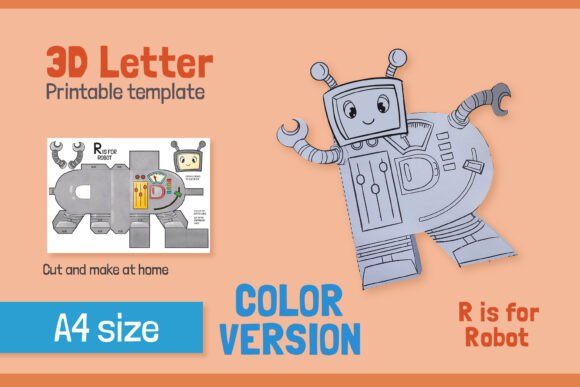
There is a distinct satisfaction in watching a flat piece of paper transform into a tangible object. For educators, parents, and creative hobbyists, this process is not just about crafting; it is about engagement. The Letter R 3D Papercraft for Kids – COLOR offers a unique intersection of artistic expression and educational utility. Specifically designed around the theme of a "Robot," this resource turns the abstract concept of the alphabet into a physical activity that children can hold, manipulate, and display.
Unlike standard worksheets that are completed and discarded, this papercraft invites interaction. It requires cutting, folding, and gluing—actions that are fundamental to developing fine motor skills and spatial awareness. But beyond the developmental benefits, this tool serves a variety of practical needs across different settings, from homeschooling environments to professional classroom decorations.
Why the Robot Theme Resonates with Young Learners
Choosing a robot as the mascot for the letter R is a strategic design choice. Robots are inherently geometric, composed of boxes, cylinders, and angular lines. This makes them ideal candidates for 3D paper construction because the shapes translate easily from 2D templates to 3D structures. For a child, assembling a robot feels less like a lesson and more like building a toy.
The color version of this papercraft adds another layer of cognitive engagement. While black-and-white templates allow for coloring creativity, pre-colored designs reduce preparation time and provide immediate visual gratification. The vibrant hues help distinguish different parts of the model, guiding the assembler through the folding process. This visual cueing is particularly helpful for younger children or those who struggle with following complex written instructions.
Practical Applications in Educational Settings
For teachers and homeschooling parents, the Letter R 3D Papercraft for Kids – COLOR is more than just a rainy-day activity. It is a versatile teaching aid that can be integrated into various curriculum points.
- Phonics Reinforcement: Associating the letter R with a concrete object like a Robot helps solidify phonetic recognition. When a child builds the robot, they are physically interacting with the letter shape, creating a stronger memory anchor than passive listening.
- Fine Motor Skill Development: The act of cutting along precise lines and folding along creases requires hand-eye coordination. These small movements strengthen the muscles in the hands and fingers, which are essential for writing proficiency later on.
- Classroom Decor: Once assembled, these robots make excellent bulletin board features. A row of 3D letter R robots creates a dynamic, textured display that captures attention far better than flat printed letters.
Educators often find that hands-on projects increase retention rates. When students are physically involved in the creation of their learning materials, they take ownership of the knowledge. The included PDF file with a link to an assembly video ensures that even teachers who are not naturally crafty can guide their students through the process with confidence.
Creative Uses for Hobbyists and Content Creators
Beyond the classroom, this digital download appeals to a broader audience of creators and entrepreneurs. Bloggers focusing on parenting, education, or DIY crafts can use the Letter R 3D Papercraft for Kids – COLOR as content fodder. Creating a tutorial video or a step-by-step photo guide using this specific template can drive traffic and engage audiences looking for quick, high-quality activities.
Small business owners who run after-school programs or summer camps can utilize these templates as low-cost, high-impact activities. Since the files are digital (A4 JPEG and PDF), there is no inventory cost. You print only what you need, when you need it. This flexibility is crucial for businesses that need to adapt quickly to changing group sizes or themes.
Furthermore, graphic designers and illustrators can study the layout of these templates to understand how 3D forms are flattened into 2D nets. It serves as a practical example of packaging design principles, offering insight into how structural integrity is maintained through tabs and glue points.
What to Consider Before Downloading and Printing
While the process seems straightforward, achieving a professional-looking result requires some preparation. Here are key factors to consider to ensure the best experience with your Letter R 3D Papercraft for Kids – COLOR.
Paper Quality Matters
The template is provided at 300 dpi, which is high resolution, but the output depends heavily on your paper choice. Standard printer paper (80 gsm) may be too flimsy for a 3D structure, leading to a robot that collapses under its own weight. For best results, use cardstock or heavy-weight paper (160–200 gsm). This provides the necessary rigidity for the folds to hold their shape and gives the final model a premium feel.
Precision in Cutting and Folding
The difference between a messy craft and a polished model lies in precision. Use sharp scissors or a craft knife for clean edges. Blunt tools can tear the paper, especially if you are using thicker cardstock. Additionally, scoring the fold lines before folding them can make a significant difference. Using a blunt bone folder or the back of a butter knife to lightly indent the fold lines ensures crisp, straight edges rather than rounded, uneven bends.
Adhesive Selection
Not all glues are created equal for papercraft. Liquid white glue can warp thin paper if applied too generously. Glue sticks are cleaner and faster but may not hold heavy cardstock securely. For the Letter R 3D Papercraft for Kids – COLOR, a strong glue stick or double-sided tape often works best for the smaller tabs, while liquid glue can be used sparingly on larger surfaces if allowed to dry properly.
Enhancing the Learning Experience with Digital Support
One of the standout features of this product is the inclusion of a PDF file with a link to an assembly video. In an era where visual learning is dominant, this resource bridges the gap between static instructions and dynamic understanding. For visual learners, seeing the folds happen in real-time clarifies ambiguities that diagrams might miss.
This video support also empowers children to work independently. Instead of relying constantly on an adult for guidance, they can pause and rewind the video, fostering problem-solving skills and self-reliance. For parents juggling multiple tasks, this autonomy is invaluable. It allows the child to engage deeply with the task while the parent supervises from a distance.
Final Thoughts on Integrating 3D Crafts into Daily Routine
The Letter R 3D Papercraft for Kids – COLOR is a testament to the power of simple, well-designed educational tools. It does not require batteries, screens, or expensive equipment. It relies on basic materials and human creativity. Whether you are a teacher looking to spice up your phonics lessons, a parent seeking a meaningful weekend activity, or a creator needing fresh content, this template offers a reliable solution.
By focusing on the tactile experience of building, we help children connect with learning on a deeper level. The robot stands not just as a representation of the letter R, but as a symbol of what can be achieved with patience, precision, and a bit of paper. Downloading the file is just the first step; the real value emerges when you print, cut, and bring the design to life.