Build Letter A: 3D Papercraft Airplane for Kids
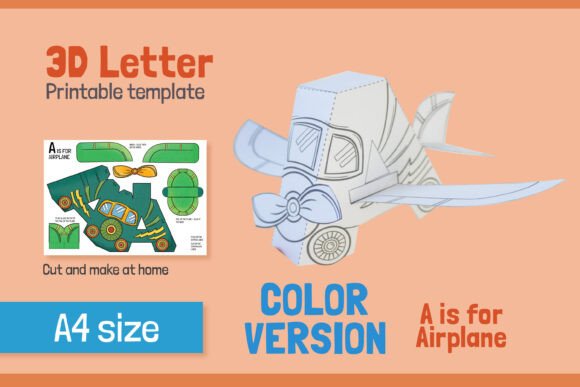
There is a distinct, tactile satisfaction in transforming a flat sheet of paper into a three-dimensional object. For children, this process is not merely play; it is a foundational exercise in spatial reasoning and fine motor development. The Letter a 3D Papercraft for Kids - COLOR set captures this educational magic by turning the alphabet into an interactive engineering challenge. Specifically designed with the letter "A" for "Airplane," this resource moves beyond traditional coloring books, inviting young learners to cut, fold, and glue their way to a tangible result. It is a vibrant, hands-on tool that bridges the gap between abstract literacy concepts and physical creation.
While many educational resources focus solely on recognition, this papercraft emphasizes construction. The visual characteristics are bold and inviting, utilizing high-contrast colors that appeal to developing eyes. The design personality is playful yet structured, ensuring that the final product looks like a recognizable airplane while maintaining the geometric integrity of the letter "A." This dual purpose makes it an excellent asset for parents, teachers, and hobbyists who value learning through doing. Whether you are decorating a classroom wall or looking for a quiet afternoon activity, this kit offers a structured yet creative outlet.
The Educational Value of Tactile Typography
In an increasingly digital world, the importance of physical manipulation in early childhood education cannot be overstated. When a child engages with the Letter a 3D Papercraft for Kids - COLOR, they are practicing essential skills that extend far beyond arts and crafts. Cutting along precise lines enhances hand-eye coordination and dexterity. Folding along scored lines requires patience and an understanding of cause and effect. Gluing components together demands spatial awareness, as the child must visualize how a two-dimensional pattern translates into a three-dimensional form.
This specific "A for Airplane" model is particularly effective because it connects phonics with function. The child learns that "A" is not just a shape on a page but the starting point for "Airplane," an object they can hold and fly. This multisensory approach reinforces memory retention. For educators and homeschooling parents, this aligns perfectly with kinesthetic learning styles. It transforms passive observation into active participation. The vibrant color version adds another layer of engagement, allowing children to associate specific hues with the structure, further stimulating cognitive development.
Moreover, the process builds confidence. Completing a complex task like assembling a 3D model provides a sense of accomplishment. It teaches resilience when a fold does not go perfectly and problem-solving when pieces need adjustment. These soft skills are crucial for overall development. By using high-quality assets like the provided 300 dpi JPEG and PDF files, you ensure that the materials are durable and easy to work with, reducing frustration and keeping the focus on learning and fun.
Design Precision and User Experience
From a design perspective, the quality of the source material dictates the success of the final craft. The Letter a 3D Papercraft for Kids - COLOR is engineered with precision. The included A4 page is optimized for standard home printers, ensuring accessibility for most users. At 300 dpi, the print quality is sharp, preventing pixelation that can make cutting difficult for small hands. Clear, bold lines guide the cutting process, while subtle fold indicators help users distinguish between mountain and valley folds, a common stumbling block in papercraft.
The inclusion of a PDF file with a link to an assembly video is a thoughtful touch that elevates the user experience. Video tutorials provide dynamic guidance that static images often lack. They allow users to see the folding techniques in real-time, clarifying ambiguous steps. This support system is invaluable for adults who may not be experienced in origami or papercraft themselves. It ensures that the activity remains enjoyable rather than frustrating. The design balances aesthetic appeal with functional clarity, making it suitable for both novice crafters and experienced hobbyists.
The color palette is chosen to be engaging without being overwhelming. It supports the structural elements of the airplane, highlighting wings, fuselage, and tail sections. This attention to detail helps children understand the parts of the object they are building. It is a prime example of how good design can facilitate learning. The layout is efficient, minimizing waste and maximizing the use of the paper sheet. This consideration for sustainability and practicality resonates with modern parents and educators who are mindful of resource usage.
Versatile Applications Beyond the Classroom
While primarily aimed at children, the utility of this papercraft extends into various creative and professional contexts. For interior designers or event planners, these 3D letters can serve as unique decorative elements. Imagine a nursery or a children’s party decorated with hanging 3D alphabet airplanes. They add depth and texture to the space, creating a whimsical atmosphere that flat decorations cannot achieve. The vibrant colors can be coordinated with existing themes, offering a customizable design solution.
For content creators and bloggers, documenting the assembly process can generate engaging social media graphics. Time-lapse videos of the crafting process perform well on platforms like Instagram and TikTok, appealing to audiences interested in DIY projects and parenting hacks. The visual appeal of the finished product makes it highly shareable, potentially driving traffic to educational blogs or craft websites. It serves as excellent content fodder for those focusing on family-friendly activities or educational reviews.
Small business owners in the education sector can use this as a sample of their teaching methodology. Demonstrating how they integrate hands-on activities into their curriculum can build trust with potential clients. It showcases a commitment to holistic education that values motor skills alongside academic knowledge. Additionally, publishers of educational materials can study this design to understand how to create more engaging supplementary resources. The success of such a simple concept highlights the demand for interactive learning tools.
Practical Tips for Best Results
To get the most out of the Letter a 3D Papercraft for Kids - COLOR, consider the following practical recommendations. First, use cardstock rather than standard printer paper if possible. Cardstock provides the necessary rigidity for the airplane to hold its shape and withstand handling. If cardstock is not available, printing on regular paper and mounting it onto cereal box cardboard can yield similar results. This hack is cost-effective and environmentally friendly.
Second, invest in quality tools. Sharp scissors are essential for clean cuts, especially around smaller details. A bone folder or a dull butter knife can help create crisp folds, which are critical for the structural integrity of the 3D model. For gluing, a glue stick is often less messy and easier for children to control than liquid glue. However, for stronger bonds, a small amount of white craft glue applied with a toothpick can be more effective for tricky joints.
Finally, embrace the imperfections. The goal is learning and enjoyment, not perfection. If a fold is slightly off, use it as a teaching moment about adjustment and adaptation. Encourage children to personalize their airplanes with additional markers or stickers after assembly. This adds a layer of creative ownership and makes each project unique. By following these tips, you ensure a smooth and rewarding crafting experience that maximizes the educational and fun potential of the kit.
In conclusion, the Letter a 3D Papercraft for Kids - COLOR is more than just a craft kit. It is a carefully designed educational tool that promotes skill development, creativity, and joy. Its thoughtful design, combined with practical support materials, makes it accessible and enjoyable for a wide range of users. Whether used in a classroom, at home, or as part of a creative project, it offers lasting value and memorable experiences.