Kitchen Garden Tools PNG: A Guide to High-Resolution 3D Assets for Modern Design
In the evolving landscape of digital design, the demand for assets that bridge the gap between flat minimalism and photorealistic imagery has never been higher. Among these resources, Kitchen Garden Tools PNG collections have emerged as a distinct category, offering designers a way to inject depth, texture, and vibrancy into their projects without the overhead of creating 3D models from scratch. These assets are not merely static images; they represent a specific aesthetic approach characterized by modern rendering techniques, rich color palettes, and exceptional clarity.
For professionals and enthusiasts alike, selecting the right visual elements is a critical decision that impacts the overall quality of a project. Whether you are designing a user interface for a gardening app, creating marketing materials for an eco-friendly brand, or illustrating a blog post about sustainable living, the choice of icon style can define the tone of your work. This article explores what makes high-quality Kitchen Garden Tools PNGs unique, how they compare to traditional alternatives, and when they are the most effective choice for your creative needs.
Defining the Standard: What Makes These Assets Distinct?
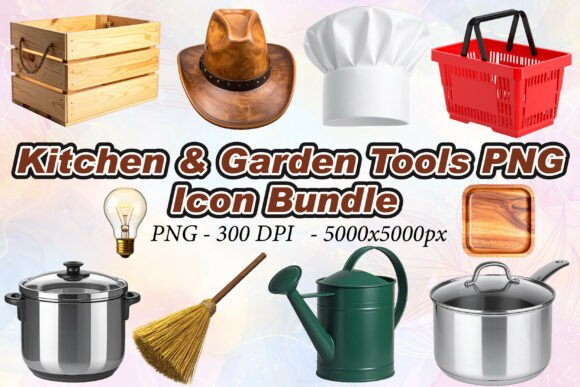
The primary distinction of this specific collection lies in its technical specifications and artistic execution. Unlike standard clip art or low-resolution vector icons often found in generic stock libraries, these Kitchen Garden Tools PNG files are rendered at a massive 5000x5000 px resolution with a density of 300 DPI. This level of detail ensures that every curve of a trowel, the texture of a watering can, or the bristles of a rake remain crisp, even when viewed up close or printed on large-format materials.
The "Modern 3D" style is another defining characteristic. These icons utilize lighting, shadow, and material properties to create a sense of volume and realism that flat designs cannot achieve. The vibrant color palette is carefully calibrated to evoke freshness and vitality, which is particularly relevant for themes related to nature, agriculture, and home improvement. Furthermore, the inclusion of a transparent background means these assets are ready for immediate integration. There is no need for time-consuming background removal processes, allowing designers to focus on composition rather than technical cleanup.
Comparing Formats: 3D PNGs vs. Flat Vectors and Photorealism
When evaluating visual assets, it is essential to understand where 3D-rendered PNGs sit within the broader spectrum of design resources. The three main contenders are typically flat vector graphics, photorealistic photography, and 3D-rendered icons like the Kitchen Garden Tools PNG collection.
Flat Vector Graphics have long been the industry standard for user interfaces (UI) and web design due to their scalability and small file sizes. They offer a clean, minimalist look that works well for functional applications. However, they often lack the tactile quality and emotional resonance that 3D elements provide. If a project requires a playful, engaging, or premium feel, flat icons may appear too sterile. In contrast, the 3D style adds a layer of sophistication and depth that can make a brand feel more established and trustworthy.
Photorealistic Images offer the highest level of realism but come with significant tradeoffs. Photographing individual garden tools against a white background requires studio equipment, lighting expertise, and post-production editing. Even then, integrating photos into graphic designs can be challenging because the lighting in the photo must match the lighting of the surrounding design elements. Kitchen Garden Tools PNGs solve this problem by providing a consistent lighting style across the entire set. Every icon looks like it belongs in the same environment, ensuring visual harmony that is difficult to achieve with mixed photographic sources.
Custom 3D Modeling is another alternative, but it is resource-intensive. Creating custom 3D models for a set of garden tools requires specialized software skills and significant time investment. For most designers, purchasing a pre-rendered collection is a far more efficient solution. It offers the aesthetic benefits of 3D design—depth, shadows, and realistic textures—at a fraction of the cost and time required for custom production.
Evaluating Strengths and Tradeoffs
Like any design resource, high-resolution 3D PNGs come with both advantages and limitations. Understanding these factors helps in making an informed decision about whether this format fits your specific project requirements.
Strengths:
- Versatility: The 5000x5000 px size allows these icons to be used as tiny UI elements or blown up for large banners without losing quality. This dual capability reduces the need for multiple asset versions.
- Aesthetic Impact: The modern 3D style stands out in crowded digital spaces. It captures attention more effectively than flat icons, making it ideal for call-to-action buttons, hero sections, and promotional graphics.
- Workflow Efficiency: With transparent backgrounds included, the barrier to entry is low. Designers can drag and drop these assets directly into their workflow, saving hours of manual editing.
- Print Readiness: At 300 DPI, these files meet professional printing standards. They are suitable for brochures, packaging, posters, and merchandise, bridging the gap between digital and physical media.
Tradeoffs and Limitations:
- File Size: High-resolution PNGs are significantly larger in file size compared to SVG vectors or low-res JPEGs. For web projects where load speed is critical, optimization may be necessary before deployment.
- Color Customization: Unlike vector formats where colors can be changed instantly via code or design software, rasterized PNGs have fixed colors. While the collection features vibrant hues, altering them to match a strict brand guideline requires additional editing work.
- Scalability Limits: While the 5000x5000 px size is impressive, it is still a raster image. If a project requires scaling beyond the original dimensions, pixelation will occur. Vectors remain superior for infinite scalability.
Best-Fit Situations and Decision Factors
Determining when to use Kitchen Garden Tools PNGs depends largely on the goals of your project and the medium in which it will be displayed.
When to Choose 3D PNGs:
This format is the optimal choice when visual appeal and engagement are priorities. It is particularly effective for marketing materials, such as social media advertisements, email headers, and landing pages where capturing the user's attention quickly is vital. The vibrant, lifelike quality of the icons aligns perfectly with brands in the lifestyle, wellness, and home improvement sectors. Additionally, if you are working on a print project, such as a gardening guide or product packaging, the high DPI ensures that the final output looks professional and polished. For app developers looking to add a touch of personality to their interface without building a full 3D engine, these assets offer a lightweight yet impactful solution.
When to Consider Alternatives:
There are scenarios where other formats may be more appropriate. If your project involves a strictly monochromatic brand identity or requires frequent color changes based on user interaction, editable vector files (SVG) would be more practical. Similarly, for complex data visualization or technical diagrams where clarity and simplicity are paramount over aesthetic flair, flat line icons might serve the purpose better. Finally, if bandwidth is a severe constraint for a mobile-first website with limited connectivity, optimizing these large PNGs or switching to smaller, compressed formats might be necessary to maintain performance.
Practical Applications in Real-World Projects
To illustrate the versatility of these assets, consider a few practical use cases. A startup launching a new organic fertilizer brand could use the 3D icons to create a cohesive visual identity across their website and social media channels. The depth and color of the icons would reinforce the natural, high-quality message of the brand. Alternatively, a freelance designer creating a template for a gardening blog could incorporate these icons as section dividers or list bullets, adding a unique stylistic element that distinguishes their work from competitors using standard clip art.
Furthermore, educators creating digital content about sustainability could use these high-resolution images to make learning materials more engaging for students. The realistic depiction of tools helps learners connect abstract concepts with tangible objects. In each of these examples, the decision to use Kitchen Garden Tools PNGs is driven by the need for a balance between professional quality, ease of use, and visual impact.
Making the Final Choice
Selecting the right visual assets is a strategic decision that influences how your audience perceives your work. The Kitchen Garden Tools PNG collection offers a compelling blend of modern aesthetics and technical precision. By providing high-resolution, transparent-background icons with a consistent 3D style, it addresses many of the common pain points designers face, such as inconsistent lighting, low resolution, and time-consuming editing.
While it may not replace the need for vectors in every scenario, it fills a crucial niche for projects requiring depth, vibrancy, and immediate usability. When evaluating your options, weigh the importance of visual richness against the constraints of file size and color flexibility. For those seeking to elevate their digital and print designs with a professional, modern touch, these high-quality 3D icons represent a powerful tool in the creative arsenal.