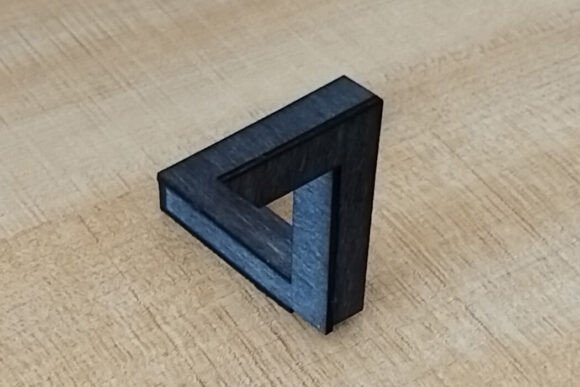
Impossible Triangle 3D: Laser Cutter Design Guide
The visual paradox of the impossible triangle has long captivated artists, architects, and designers. It is a shape that defies logic, presenting a three-dimensional object that cannot exist in physical space. For makers working with digital fabrication tools, this geometric curiosity transforms into a powerful design element. The Impossible Triangle 3D, specifically the design inspired by Oscar Reutersvard, offers a unique opportunity to blend optical illusion with tangible craft. When you integrate this motif into your laser cutting projects, you are not just creating a shape; you are crafting an experience that challenges perception and elevates the aesthetic value of your work.
This design is particularly valuable because it bridges the gap between abstract art and functional manufacturing. Whether you are a professional sign maker, a hobbyist creating home decor, or an educator teaching geometry, the versatility of this vector art allows for immediate application. The core appeal lies in its ability to turn standard materials like wood, acrylic, or leather into conversation-starting pieces. By utilizing high-quality vector files, creators can ensure that the intricate lines and angles required for the illusion remain sharp and precise during the cutting process.
Mastering Vector Precision with Multiple File Formats
One of the most significant advantages of using a comprehensive digital package for the Impossible Triangle 3D is the flexibility provided by diverse file formats. In the world of laser cutting, compatibility is paramount. A design that looks perfect on a screen can fail if the software interpreting the cut path does not support the specific vector data. This is why having access to CDR, SVG, DXF, JPG, AI, and EPS files is essential for a smooth workflow.
For users operating CorelDRAW, the CDR file ensures native compatibility, allowing for direct manipulation of nodes and curves without conversion errors. Similarly, Adobe Illustrator users will find the AI and EPS files indispensable for maintaining editability and layer integrity. These formats are industry standards for professional graphic design, ensuring that the complex geometry of the Reutersvard-inspired triangle remains intact when scaled up for large signage or down for small jewelry components.
However, the true power of this collection lies in its universal formats. The SVG (Scalable Vector Graphics) file is ideal for web-based design tools and modern cutting machines that prefer open-source formats. It allows for infinite scaling without pixelation, a critical feature when adjusting the size of the impossible triangle for different material constraints. Meanwhile, the DXF file serves as the backbone for CAD software and many industrial laser controllers. If your workflow involves integrating the design into a larger architectural model or a technical drawing, the DXF format provides the necessary structural data.
Even the JPG file included in the package serves a practical purpose. While not a vector format suitable for cutting, it acts as a high-resolution preview. This allows clients or team members who do not have vector editing software to visualize the final outcome before production begins. It simplifies the approval process and ensures everyone shares the same vision of the final product.
Streamlining Your Workflow with Instant Access
In a fast-paced creative environment, time is often the most scarce resource. Traditional design processes can involve days of drafting, rendering, and troubleshooting file compatibility issues. The Impossible Triangle 3D digital download eliminates these bottlenecks through instant delivery. As soon as the transaction is complete, the zip file containing all necessary assets is available for immediate use. This immediacy supports agile project management, allowing professionals to move from concept to production within hours rather than days.
This speed is particularly beneficial for entrepreneurs and small business owners who need to fulfill custom orders quickly. Imagine a client requesting a unique wall art piece featuring an optical illusion. With pre-made, optimized files, you can begin the cutting process almost immediately after receiving the order. There is no need to spend billable hours recreating a complex geometric shape from scratch. Instead, you can focus your energy on material selection, finishing techniques, and customer service.
The efficiency extends to the testing phase as well. Because the files are ready for any cutting machine that supports standard formats, you can run test cuts on scrap material right away. You can adjust power settings, speed, and frequency to achieve the cleanest edge possible. This rapid iteration capability reduces waste and ensures that the final product meets quality standards before committing expensive materials to the job.
Practical Applications Across Industries
The utility of the Impossible Triangle 3D extends far beyond simple decoration. Its striking visual nature makes it applicable across various sectors, each benefiting from the design's unique properties in different ways.
Interior Design and Architecture: Architects and interior designers often seek elements that add depth and intrigue to a space. A laser-cut Impossible Triangle mounted on a wall or integrated into a ceiling fixture can serve as a focal point. The interplay of light and shadow enhances the illusion, making a flat surface appear three-dimensional. This effect can be used to draw attention to specific areas of a room or to create a sense of movement in static environments.
Marketing and Branding: For marketers and business owners, standing out is crucial. Using this design for logos, trade show displays, or promotional items creates a memorable brand identity. The paradoxical nature of the shape naturally draws the eye and encourages engagement. A business card featuring a laser-cut Impossible Triangle made from acrylic leaves a lasting impression, signaling creativity and attention to detail.
Education and STEM: Educators can leverage this design to teach concepts in geometry, optics, and physics. The Impossible Triangle 3D serves as a tangible example of how two-dimensional representations can trick the human brain into perceiving three dimensions. Students can assemble the pieces to understand the mechanics of the illusion or study the vector mathematics behind the shape. It transforms abstract theory into a hands-on learning experience.
Hobbyists and Crafters: For the DIY enthusiast, this design offers a chance to create gallery-worthy pieces without advanced drafting skills. Whether working with basswood for a rustic look or colored acrylic for a modern vibe, the result is a sophisticated object that appears much more complex than it actually is to produce. It empowers makers to expand their portfolio with minimal effort.
Considerations for Material and Scale
While the Impossible Triangle 3D design is versatile, successful execution depends on understanding material limitations and scale considerations. The illusion relies heavily on line weight and perspective. If the design is scaled too small, the thin lines may become fragile or indistinguishable after cutting. Conversely, scaling it too large without adjusting the thickness of the vectors can make the object feel unbalanced.
When working with brittle materials like glass or certain types of acrylic, the sharp angles inherent in the Reutersvard design require careful handling. The heat from the laser cutter can sometimes cause stress fractures at tight corners. It is advisable to run a test cut to determine the optimal speed and power settings for your specific material. Additionally, consider the mounting method. Since the design is often intended to be viewed from a specific angle to maintain the illusion, the backing or frame must not obstruct the critical lines that create the effect.
Furthermore, while the digital files provide the blueprint, the final aesthetic is determined by the finish. Polishing edges on acrylic can enhance the refraction of light, deepening the illusion. In contrast, a raw wood finish might emphasize the texture and grain, offering a more organic interpretation of the geometric paradox. Understanding these nuances allows you to tailor the design to the specific needs of your project.
Empowering Creativity Without Physical Constraints
Ultimately, the value of the Impossible Triangle 3D digital download lies in its ability to democratize high-level design. By providing a library of professional-grade vector files, it removes the barrier of entry for those who wish to incorporate complex geometric art into their work. You do not need to be a master draftsman to produce stunning results; you simply need the right tools and a vision.
This approach supports a broader goal of creative efficiency. It allows professionals to allocate their time toward strategic decisions—such as color theory, material sourcing, and market positioning—rather than getting bogged down in technical drawing. The inclusion of multiple file formats ensures that the design fits seamlessly into existing workflows, regardless of the software ecosystem you rely on.
As you explore the possibilities of laser cutting, remember that the best designs are those that solve problems while inspiring wonder. The Impossible Triangle achieves both. It solves the problem of finding a unique, scalable, and visually arresting motif, while simultaneously inspiring curiosity in anyone who encounters it. Whether you are producing a single custom piece or launching a new product line, this design offers a solid foundation for success.