Why 3D Medical Healthcare Icons Are Transforming Digital Health Communication
In the fast-paced world of digital health, clarity is not just a design preference; it is a necessity. Whether you are building a telemedicine app, designing an educational brochure for patients, or creating a pitch deck for investors, the visual language you choose speaks volumes before a single word is read. This is where 3D Medical Healthcare Icons have become an indispensable tool for creators and professionals alike. Unlike flat, two-dimensional graphics that can sometimes feel sterile or outdated, modern 3D icons bring depth, warmth, and approachability to complex medical concepts.
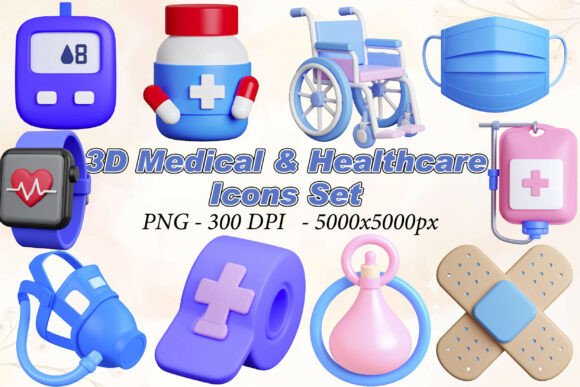
This collection delivers a clean, professional assortment of essential medical graphics rendered in a contemporary 3D style. From the familiar curves of stethoscopes and syringes to the structured lines of hospital beds and ambulances, each element is crafted with smooth shading and vibrant colors. But beyond aesthetics, these high-resolution assets solve a very real problem: how to make healthcare information feel accessible rather than intimidating.
Bridging the Gap Between Clinical Precision and User Comfort
For decades, medical imagery was dominated by stark, clinical photography or abstract line art. While functional, these styles often failed to engage users on an emotional level. Today’s healthcare consumers—patients, students, and wellness enthusiasts—are looking for experiences that feel human-centric. Using 3D Medical Healthcare Icons allows designers to soften the edges of medical topics. A 3D-rendered pill bottle or heart monitor looks tangible and friendly, reducing the anxiety often associated with medical procedures or diagnoses.
Consider a telehealth startup launching a new patient portal. The interface needs to guide users through booking appointments, uploading prescriptions, and viewing test results. If the icons are cold or confusing, user adoption drops. However, by integrating vibrant, high-clarity 3D icons, the platform feels modern and trustworthy. The smooth shading and realistic lighting cues help users instantly recognize functions without needing extensive labels, streamlining the user experience (UX) significantly.
Practical Applications Across Industries
The versatility of this icon set means it serves a wide range of professionals. Here is how different users can leverage these assets in real-world scenarios:
Healthcare UI and UX Design
Designers working on mobile health apps know that screen real estate is precious. You need icons that are instantly recognizable at small sizes but still look crisp on high-density displays. With a resolution of 2000 x 2000 px and 300 DPI, these PNG files remain sharp whether they are used as tiny navigation buttons or large feature illustrations. The transparent background is crucial here, allowing seamless integration into any color scheme or interface layout without awkward white boxes around the graphics.
Medical Education and Training
Educators and medical publishers face the challenge of making dense information digestible. In textbooks, e-learning modules, or classroom presentations, visual aids break up text and reinforce learning. A 3D illustration of a test tube or a thermometer can serve as a visual anchor for a lesson on diagnostics. For students, these visuals are more engaging than standard clipart, helping to maintain attention during long study sessions. Freelance instructional designers can use these assets to create cohesive course materials that look professionally produced without the budget of a custom 3D modeling team.
Marketing and Wellness Campaigns
Marketers in the wellness sector often struggle to balance professionalism with approachability. Whether you are promoting a new vitamin supplement, a fitness tracker, or a mental health service, your visuals need to resonate with everyday people. These icons are perfect for social media graphics, email newsletters, and blog headers. For instance, a wellness blogger might use a 3D heart monitor icon to discuss cardiovascular health, making the topic feel less like a medical lecture and more like helpful lifestyle advice. The vibrant colors ensure that posts stand out in crowded social feeds, driving higher engagement rates.
Corporate Presentations and Infographics
Consultants and analysts frequently present data related to healthcare trends, hospital efficiency, or pharmaceutical sales. Standard bar charts are boring. By incorporating 3D medical symbols into infographics, presenters can tell a more compelling story. An ambulance icon can represent emergency response times, while a hospital bed icon can illustrate occupancy rates. This visual storytelling makes data memorable and helps stakeholders grasp key insights quickly. Since the files are drag-and-drop ready, busy professionals can enhance their slides in minutes rather than hours.
What to Consider Before Downloading
While the benefits are clear, choosing the right graphic assets requires some due diligence. Not all icon sets are created equal, and understanding the technical specifications ensures you get the most value from your purchase.
- Resolution and Scalability: Ensure the icons are high-resolution. This set offers 2000 x 2000 px files at 300 DPI, which is ideal for both digital screens and print materials like brochures or posters. Low-resolution icons will appear pixelated when enlarged, undermining the professional look you are aiming for.
- File Format and Transparency: PNG files with transparent backgrounds are the industry standard for flexibility. They allow you to place icons over any background color or image without editing. Avoid formats like JPEG for icons, as they do not support transparency and often introduce compression artifacts.
- Style Consistency: One of the biggest mistakes in design is mixing incompatible styles. If you choose a 3D aesthetic, stick with it throughout your project. This collection provides a cohesive look across all items—from pills to stethoscopes—ensuring your final product looks unified and polished.
- Licensing and Usage Rights: Always check the license terms. This is a digital download only, meaning no physical items will be shipped. Understand whether the license covers commercial use, especially if you are using the icons for client work or products you intend to sell.
Enhancing Credibility Through Quality Design
In the healthcare sector, trust is paramount. Poor-quality graphics can subconsciously signal carelessness or lack of expertise. Conversely, high-quality, well-designed visuals like these 3D Medical Healthcare Icons convey professionalism and attention to detail. When patients see a clean, modern interface or a well-designed educational pamphlet, they are more likely to trust the information provided.
For small business owners and entrepreneurs, this is a cost-effective way to elevate brand perception. Hiring a 3D artist to create custom icons for every medical instrument can cost thousands of dollars and take weeks. Purchasing a pre-made, high-quality set allows you to achieve a similar aesthetic for a fraction of the cost and time. This efficiency is vital for startups and freelancers who need to move quickly without compromising on quality.
Final Thoughts on Visual Strategy
Integrating 3D Medical Healthcare Icons into your projects is not just about making things look pretty; it is about improving communication. Whether you are simplifying complex medical data for patients, enhancing the usability of a health tech app, or creating engaging educational content, these tools provide the visual clarity needed to connect with your audience. By choosing assets that combine technical precision with aesthetic appeal, you ensure that your message is not only seen but understood and trusted. As digital health continues to evolve, the demand for human-centered, visually engaging content will only grow, making these icons a smart investment for any forward-thinking creator or business.