Ratinho Cartoon: Integrating 3D Assets into Creative Workflows
The integration of digital assets into physical production has transformed how creators, small business owners, and hobbyists approach manufacturing. Among the diverse array of models available today, the Ratinho Cartoon stands out as a versatile asset that bridges the gap between digital design and tangible results. This 3D model represents more than just a cute character; it is a functional component in a broader workflow involving design validation, material testing, and product development. For professionals aged 20 to 50 who manage creative projects, understanding how to utilize specific models like this one efficiently can streamline production cycles and enhance the quality of final outputs.
Understanding the Ratinho Cartoon Asset
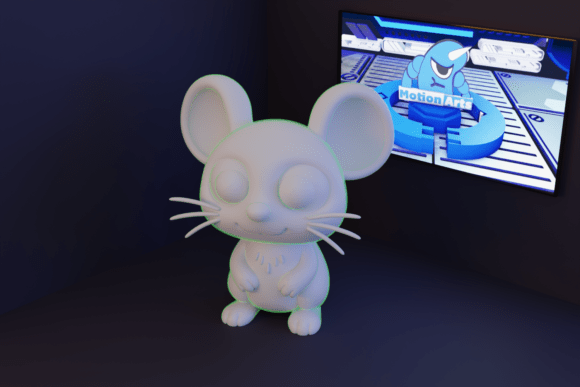
The Ratinho Cartoon is an AI-generated 3D design optimized for additive manufacturing. Visually, it features a small, curious rat with expressive, cartoonish traits designed to appeal to collectors and decorators alike. From a technical perspective, the file is provided in STL format, which is the industry standard for slicing software used in 3D printing. The model boasts a lightweight design with balanced proportions, specifically engineered to ensure easy printing and a clean finish regardless of the chosen color or scale.
In a professional context, this asset fits into the "prototyping" or "product realization" phase of a project. Whether you are a marketer creating a unique giveaway, an educator developing tactile learning aids, or a freelancer building a portfolio of printed goods, the Ratinho Cartoon serves as a reliable test case. Its geometry is not overly complex, yet it contains enough detail to challenge slicer settings and reveal potential issues in your printing workflow before you commit to larger, more expensive productions.
Workflow Integration: Pre-Production Planning
Before initiating the print job, effective planning is essential to maximize efficiency. The Ratinho Cartoon requires a strategic approach during the preparation stage. Since the model is compatible with both FDM (Fused Deposition Modeling) and resin printers, the first decision point involves selecting the appropriate hardware based on the desired outcome.
- FDM Printing: Ideal for durable, larger-scale versions where surface texture is less critical than structural integrity. This method is cost-effective for bulk production.
- Resin Printing: Recommended for high-detail miniatures where the fine facial expressions and smooth curves of the cartoon rat are paramount.
During this planning phase, users must consider the necessity of support structures. The disclaimer accompanying the Ratinho Cartoon explicitly states that supports are required. In a workflow context, this means allocating time for post-processing. If you are managing a tight deadline, factor in the additional hours needed to remove supports and sand the surface. Ignoring this step often leads to frustration and wasted materials, disrupting the overall project timeline.
Software Compatibility and Slicing Strategy
Once the hardware is selected, the next step involves importing the STL file into your slicing software. Because the Ratinho Cartoon is an intermediate-level model, it offers a perfect opportunity to refine your slicing parameters. Professionals should review the orientation of the model carefully. Printing the rat upright might require extensive supports under the ears and tail, whereas printing it on its back could minimize support usage but potentially compromise the top surface finish.
This interaction between the digital file and the slicer is a critical control point. By experimenting with different orientations and infill densities on the Ratinho Cartoon, creators can establish a baseline for their printer's performance. This data is invaluable when scaling up to custom designs later. It allows you to validate your machine's calibration, ensuring that layer adhesion and dimensional accuracy meet your quality standards before moving to client-specific work.
Execution and Quality Control
During the actual printing process, the Ratinho Cartoon acts as a benchmark for consistency. Its rounded shapes and expressive features make it sensitive to common printing errors such as stringing, layer shifting, or poor overhang handling. Monitoring the print of this specific model provides immediate feedback on the health of your equipment.
For entrepreneurs running a small 3D printing service, using a recognizable character like this rat can also serve as a marketing tool. A successful print demonstrates capability. However, it is crucial to adhere to the disclaimer: actual printed results may vary depending on materials and settings. Therefore, a rigorous quality control (QC) process is necessary. Inspect the finished piece for warping, incomplete layers, or rough edges left by support removal.
If the goal is to sell these items, the post-print finishing becomes part of the value proposition. Sanding, priming, and painting the Ratinho Cartoon transform a raw plastic object into a collectible item. This stage highlights the importance of having a dedicated workspace organized for post-processing. Efficient workflows separate the printing zone from the finishing zone to maintain cleanliness and speed up turnaround times.
Strategic Use Cases for Professionals
The versatility of the Ratinho Cartoon extends beyond simple decoration. Here is how different professionals can integrate this asset into their specific routines:
For Marketers and Brand Managers
Brands often need unique physical tokens to engage audiences. The Ratinho Cartoon can be customized with company colors or logos (via UV printing or paint) to create memorable swag. Unlike mass-produced plastic toys, a 3D printed item feels bespoke. The workflow here involves sourcing the STL, printing a batch, and distributing them at events or including them in subscription boxes. The low barrier to entry makes it an excellent option for agile marketing campaigns.
For Educators and Workshop Leaders
In educational settings, this model serves as a practical example for teaching students about 3D modeling and printing. Teachers can use the Ratinho Cartoon to demonstrate concepts like topology, support generation, and material properties. Students can learn by troubleshooting why a specific angle failed or how to optimize the print for speed versus quality. This hands-on approach reinforces theoretical knowledge with real-world application.
For Freelancers and Hobbyists
Freelancers looking to expand their portfolio can use this model to showcase their finishing skills. By printing the same model in various materials—such as PLA, PETG, or ABS—and applying different painting techniques, they can build a gallery of work that demonstrates versatility. For hobbyists, it offers a satisfying project that balances difficulty and reward, keeping the enthusiasm for the craft alive without requiring advanced CAD skills.
Long-Term Value and Asset Management
Integrating the Ratinho Cartoon into your library of digital assets requires proper organization. Store the STL file in a structured directory system alongside your other tested models. Document the specific slicer settings that yielded the best results for this particular file. This documentation creates a knowledge base that accelerates future projects.
Furthermore, understanding the limitations of AI-generated designs is key to long-term success. While the Ratinho Cartoon is ready to print, AI models sometimes contain minor geometric imperfections. Regularly checking the mesh for non-manifold edges or holes ensures that you are working with a robust file. If you plan to modify the model—for instance, adding a custom base or changing the pose—ensure you have access to editing software capable of handling the mesh structure.
Conclusion
The Ratinho Cartoon is more than a digital download; it is a functional tool within a comprehensive 3D printing workflow. By approaching its use with a focus on preparation, compatibility, and quality control, professionals and enthusiasts alike can leverage this asset to achieve consistent, high-quality results. Whether used for prototyping, education, or commercial production, the model exemplifies how digital creativity translates into physical reality. As you integrate this character into your collection or business, remember that the true value lies not just in the file itself, but in the disciplined process used to bring it to life.